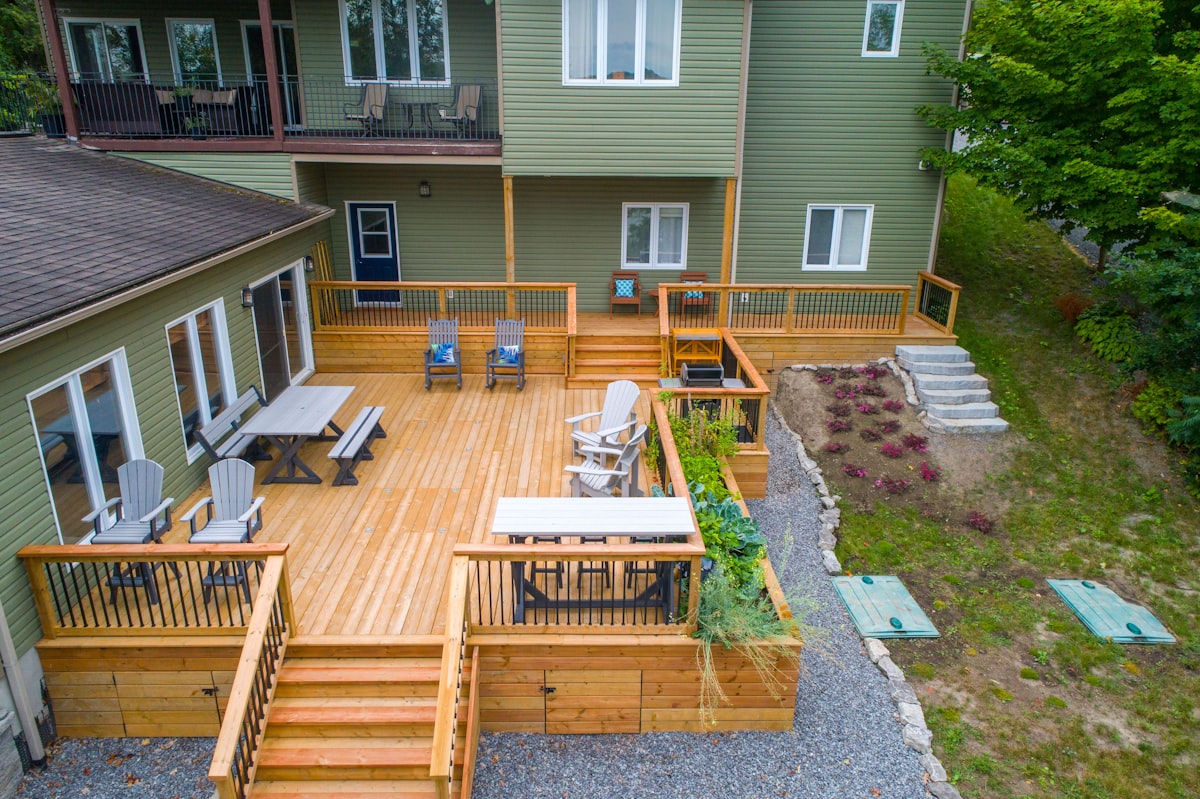
Yes — in nearly every Chicago-area municipality, a deck requires a building permit before construction starts. In Mount Prospect, the Village’s residential fee code lists a flat $200 deck permit fee, with $100 refundable; most neighboring northwest suburbs charge in the $75–$250 range. Plan on submitting drawings and passing at least two inspections — and confirm the specifics with your village before you design. In Mount Prospect that’s the Building Division at (847) 870-5675 or permit@mountprospect.org.
Building a deck in the Chicago area is one of the most satisfying home improvement projects a homeowner can take on. More square footage outdoors, a gathering space for summer cookouts, a quiet corner for morning coffee — the payoff is real. But before a single post hole is dug or a single board is purchased, there is a step that many homeowners skip or underestimate: navigating the permit and building code process. In the Chicago metro and across northern Illinois’s collar counties, that process has meaningful teeth, and what you don’t know can cost you far more than the permit itself.
Why Do Deck Permits Matter in Illinois Now?
Illinois spent decades without a statewide residential building code. That changed on January 1, 2025, when Public Act 103-0510 took effect, requiring every municipality and county in Illinois to enforce building standards at least as strict as the International Residential Code (IRC). Local governments can adopt the 2018, 2021, or 2024 edition of the IRC, and they are free to layer in stricter local amendments — Chicago, for example, goes beyond the IRC baseline on several deck-specific requirements.
For homeowners in the northwest suburbs, collar counties, and the city itself, the practical upshot is this: deck construction is now subject to a coherent, inspectable code floor everywhere in the state. There is no longer a gap where an unincorporated township might have been operating without enforceable standards. If you are building, repairing, or expanding a deck, assume a permit is required until your local building department tells you otherwise in writing.
When Is a Permit Required?
Under the IRC framework Illinois now mandates, a building permit is generally required for a deck if any one of the following is true:
- The deck is attached to the dwelling (ledger-board connected)
- The deck surface sits more than 30 inches above grade at any point
- The deck is larger than 200 square feet
- The deck serves a required exit door from the home
In practice, the attached-deck trigger alone catches the vast majority of residential projects. An attached deck of any size — even a modest 10-by-12 landing off a rear door — almost always requires a permit because the ledger connection is a structural bond between the deck and the house itself.
A narrow exemption exists for small freestanding decks: a structure that is not attached to the dwelling, stays under 200 square feet, sits less than 30 inches above grade at all points, and does not serve a required exit may qualify for an exemption in some jurisdictions. Even then, zoning setback requirements still apply, and many municipalities have filled this gap with local ordinances that require a permit regardless. When in doubt, call your building department before you design — not after.
How Do Chicago and the Northwest Suburbs Differ?
Chicago’s Department of Buildings operates under the Chicago Building Code, which predates and in many respects exceeds the IRC. A few specifics matter to anyone building within city limits:
- Guardrail height: Chicago requires a minimum 42-inch guardrail on any deck more than 30 inches above grade. The IRC baseline and most suburban jurisdictions require 36 inches. That 6-inch difference affects material costs and design choices.
- Stair tread width: Chicago specifies stair treads of at least 10.5 inches. The general IRC standard is 10 inches minimum.
- Permit process: Chicago uses E-Plan review through the Department of Buildings. Simple replacement projects may qualify for the Easy Permit Process; new construction or structural changes require the Standard Plan Review, which can take 2 to 8 weeks or longer depending on workload. Fees for permits requiring drawings start at $302 and typically land in the $302 to $600 range for a straightforward residential deck.
- Contractor licensing: Any contractor you hire in Chicago must hold a current license with the Department of Buildings. This is enforced.
In the northwest suburbs — Mount Prospect, Arlington Heights, Northbrook, Buffalo Grove, Wheeling, Palatine, and their neighbors — permit fees tend to be lower than the city’s (commonly $75 to $250 depending on the community and project scope), and review times are often one to three weeks for straightforward projects. Mount Prospect publishes a simple flat residential fee code: $200 for a deck, with $100 refundable — the same tier that covers concrete pavement — and offers free pre-application meetings through the Building Division at (847) 870-5675 or permit@mountprospect.org. Note that many villages also require a permit when you replace structural or safety components on an existing deck — beams, joists, stairs, railings — not just for brand-new construction. Confirm with your specific suburb if you are planning a repair rather than a new build.
What Do Inspectors Actually Check?
Understanding the code requirements helps you have a productive conversation with your contractor and know what inspectors are actually checking. Here are the major structural elements the IRC — and Chicago’s local amendments — govern:
Footing Depth
This is the requirement that most surprises homeowners unfamiliar with northern climates. In the Chicago metro area and across most of northern Illinois, deck footings must extend a minimum of 42 inches below grade. The purpose is to place the footing below the frost line — the depth at which the ground reliably freezes in winter. When wet soil freezes, it expands. A footing set above the frost line will heave upward with the frozen ground, then settle unevenly when the ground thaws, racking the entire deck frame over successive winters. Footings at 42 inches sit below where that freeze-thaw cycle operates, keeping the structure stable year after year. Inspectors verify footing depth before concrete is poured — once the concrete is in, there is no recovering from a shallow footing without demolition.
Ledger Board Connection
The ledger board is the horizontal framing member that bolts an attached deck directly to the house’s rim joist or band joist. It is, structurally, where the deck meets the home. The IRC requires ledger boards to be fastened with half-inch lag screws or through-bolts (never nails), sealed with continuous corrosion-resistant flashing to direct water away from the house structure, and fitted with hold-down tension devices rated to resist the lateral and uplift forces a loaded deck can produce. Improper ledger attachment is one of the leading causes of deck collapse, which is why inspectors scrutinize this connection carefully.
Guardrails and Balusters
Guardrails are required on any deck surface more than 30 inches above grade. In Chicago, the minimum height is 42 inches; in most suburbs and under the base IRC, it is 36 inches. Balusters must be spaced so that a 4-inch sphere cannot pass through any opening — this prevents small children from passing through gaps or getting their heads caught. The assembled guardrail system must withstand a 200-pound lateral load applied to the top rail.
Stairs
Deck stairs are tightly specified because they are statistically where most falls occur. The key numbers under the IRC: risers must not exceed 7.75 inches in height, treads must be at least 10 inches deep (10.5 inches in Chicago), and stairways must be at least 36 inches wide. Handrails are required for any stair with three or more risers and must sit between 34 and 38 inches above the stair-tread nosing. Baluster spacing on open stair railings follows the same 4-inch sphere rule, with a separate 6-inch exception for the triangular opening formed at the bottom of each stair riser.
Snow Load
Northern Illinois sits in a design snow load zone that typically requires structural members to be engineered for 25 to 30 pounds per square foot (psf) of snow accumulation. This affects joist sizing, beam spans, and post sizing. Your structural drawings should reflect the local design load — this is part of what a plan reviewer checks before issuing a permit.
Do I Also Need Zoning Approval?
A building permit and a zoning clearance are different things, and you often need both. Zoning ordinances control where on your lot a structure can be placed — how close to property lines (setbacks), how much of the lot can be covered by structures (lot coverage limits), and whether your lot has easements that restrict construction. In Chicago’s residential districts, for example, rear-yard setbacks are substantial, and front-yard decks typically require a variance. In suburban jurisdictions, side-yard and rear-yard setbacks for decks vary by municipality and zoning district.
The practical sequence: pull your plat of survey, identify your property lines, and ask your building department what setback applies to a deck in your zoning district before you finalize your design. Many homeowners design a deck that looks perfect on paper, then discover it extends into a required setback and must be shortened or repositioned.
Lot coverage limits are also worth confirming. Most residential zoning ordinances cap impervious or built-upon area at 45 to 50 percent of total lot area. If your lot is already dense with structures, an addition could push you over the limit and require a variance.
Does My HOA Have to Approve the Deck First?
If your property sits within a homeowners association — common throughout the collar counties and planned suburban developments across Cook, DuPage, Lake, and Will counties — you likely need HOA architectural approval before you can apply for a municipal permit, and in many cases before you finalize your design at all. HOA review processes vary widely: some associations approve projects within a week or two; others have quarterly architectural review committee meetings and require submittals weeks in advance of each meeting. Missing this step and pulling a municipal permit without HOA approval can result in a forced removal at your expense even if the structure is code-compliant. Check your CC&Rs and contact your HOA management company before you do anything else.
What Are the Steps to Get a Deck Permit?
While the specific steps vary by municipality, a typical northern Illinois deck permit follows this sequence:
- Confirm zoning clearance. Verify setbacks, lot coverage, and any easements with your building/zoning department or a review of your plat of survey.
- Get HOA approval if applicable. Submit design drawings to your HOA architectural committee and wait for written approval before proceeding.
- Prepare permit documents. You will typically need a site plan showing the deck’s location relative to the house and property lines, structural drawings specifying footing sizes and depth, beam and joist sizing, post heights and spacing, ledger attachment detail, stair configuration, and guardrail specifications, plus a property survey and a materials list.
- Submit the application. Many suburban municipalities now accept electronic submissions. Chicago uses its E-Plan system. Pay the applicable fee at submission.
- Schedule and pass inspections. Most Illinois municipalities require at minimum two inspections: a footing inspection before concrete is poured (inspector verifies hole depth and diameter), and a final inspection after construction is complete. Some municipalities add a framing inspection after the frame is up but before decking is installed, and a few require four sequential inspections. Schedule inspections at least 48 hours in advance; summer backlogs are common.
- Receive final approval. Keep a copy of your permit and final inspection sign-off with your home records. You may need it for refinancing, sale disclosure, or insurance.
What Happens If You Build Without a Permit?
The consequences of building without a permit in the Chicago area are concrete, not hypothetical. Municipal inspectors conduct periodic neighborhood surveys, and neighbor complaints are common triggers for unpermitted-work investigations. If an unpermitted deck is discovered, you face a stop-work order, mandatory retrofit to code (at your expense), and fines. In Chicago, fines for unpermitted work can reach five times the original permit fee, plus surcharges.
The longer-term consequences can be more damaging. Unpermitted structures complicate real estate transactions — a buyer’s home inspection or title search will surface the issue, and lenders may refuse to finance a home with unpermitted additions. You may be required to remove the deck or obtain a retroactive permit (which may require demolishing and rebuilding elements that cannot be inspected after the fact) before a sale can close.
Homeowner’s insurance policies also typically exclude coverage for structures built without permits. If an unpermitted deck collapses and causes injury or property damage, the coverage you thought you had may not apply.
Which Decking Material Should You Specify in the Drawings?
Your permit drawings must include material specifications. This is a useful moment to think carefully about what you are building with, because the material choice affects structural sizing, maintenance obligations, and long-term performance in a climate that delivers genuine freeze-thaw stress every winter. The structural logic behind material selection in northern Illinois—where the combination of moisture, road salt spray, and temperature cycling is demanding—is covered in depth in our piece on decking material performance in a Chicago-area winter. Reading it alongside your permit planning helps you make a choice you won’t revisit in five years.
Who Handles the Permit If You Hire a Contractor?
A design-build contractor who works in your village every week has stood at your building department’s counter far more often than you ever will — and a good one treats the permit as part of the job, not an extra. Whoever you hire, make permit responsibility explicit in the written proposal: drawings and site plan, the application itself, inspection scheduling, and final sign-off. In the northwest suburbs, Wave Outdoors Landscape + Design, a Mount Prospect design-build firm, builds custom decks across the area and is familiar with local building codes and permitting requirements. Ask any bidder — Wave included — to put the full permit scope in writing before you sign.
Starting on the Right Foot
The permit process can feel like friction, especially when the project vision is clear and the motivation is high. Treated as a system rather than an obstacle, it is actually valuable: a footing inspection catches a shallow post hole before concrete hides it for a decade; a ledger review catches a flashing detail that would have let water rot the rim joist quietly for years. The inspections are not adversarial they are a second set of informed eyes on connections that will be invisible once the decking goes down.
In a climate like northern Illinois’s where freeze-thaw cycles, snow loads, and spring saturation put real structural stress on outdoor structures getting those foundational details right at the start is what separates a deck that ages gracefully from one that loosens, sags, and eventually becomes a liability. The permit is the mechanism that ensures the standard is met. Use it.