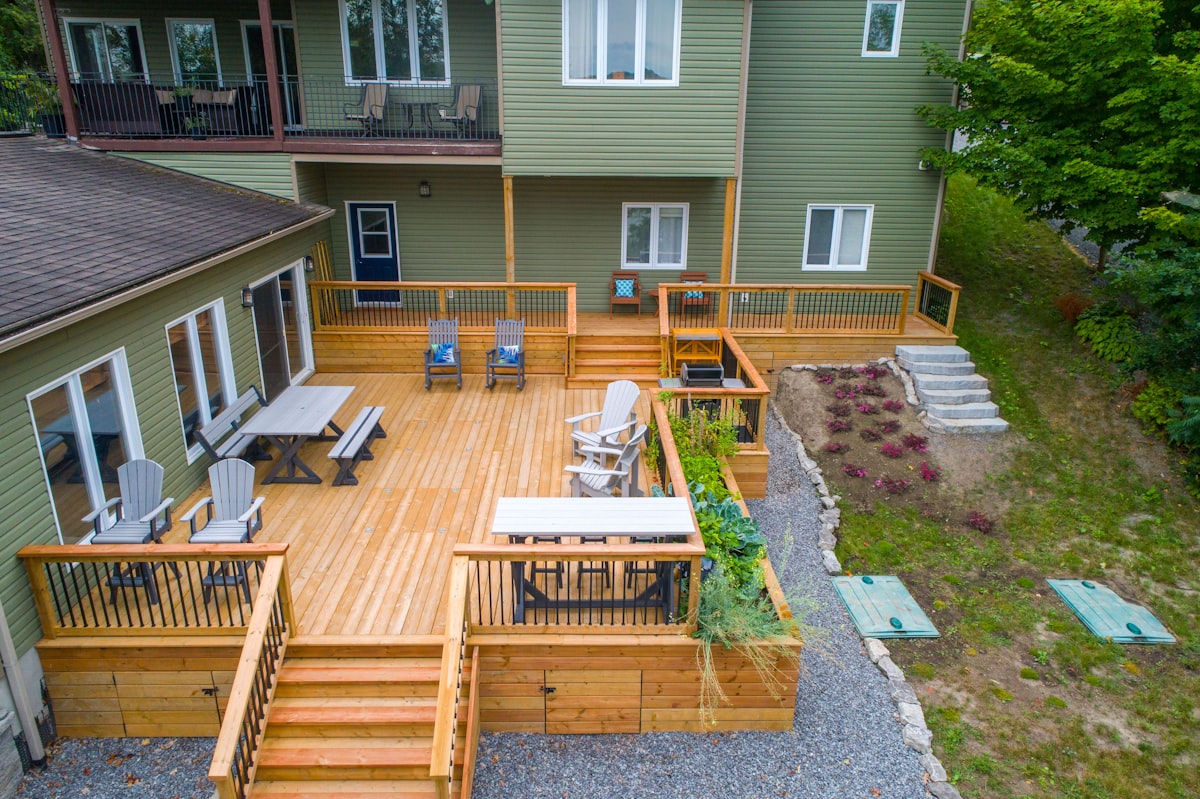
Few building materials get tested as hard as a deck in the Chicago area. Between January cold snaps, the freeze-and-thaw swing of late winter, soaking spring weeks, and a high-UV summer, an outdoor structure here lives through nearly every kind of stress a material can face — often inside a single year. For homeowners in Mt. Prospect and the northwest suburbs weighing wood against composite, the real question isn't which looks best on installation day. It's which one still looks and performs that way after a decade of northern Illinois weather.
This is a practical, technical look at how the two material families actually behave in this climate — written from the perspective of a Mt. Prospect–based design and construction team that has built and maintained both.
Why Chicago-Area Winters Are Uniquely Hard on Decks
The single most destructive force on an outdoor deck in northern Illinois is not extreme cold by itself — it's the freeze-thaw cycle. When temperatures cross the freezing point repeatedly, any moisture that a material has absorbed expands as it freezes and contracts as it thaws. Each cycle works like a tiny lever inside the material. Chicago-area winters and shoulder seasons deliver dozens of these crossings every year, far more than milder climates, because our temperatures hover around the freezing mark for long stretches in late autumn and early spring rather than staying solidly frozen.
Layer on the other stressors and the picture sharpens: deep January lows, heavy spring moisture and humidity swings, and strong summer UV that breaks down surfaces over time. A decking material that does well in a temperate climate can age very differently here. Durability in the Chicago suburbs is mostly a question of one thing — how well does this material resist absorbing water, and what happens to it when that water freezes?
It helps to picture the failure mode concretely. Water finds its way into a board through end grain, fastener holes, micro-checks, and the gaps where boards meet framing. It sits there. When it freezes it expands by roughly nine percent in volume — a small number that becomes enormous when it happens thousands of times in thousands of tiny pockets across a deck's surface. Over years, that repeated internal pressure is what loosens screws, splits board ends, pops fasteners, and opens the surface checks that let in still more water. A material's real-world lifespan in northern Illinois is largely a function of how little water it lets in before the freeze cycle can act on it. Sun and humidity accelerate the surface side of aging; freeze-thaw is what does the structural damage.
How Wood Decking Responds to Midwest Winters
Natural wood — pressure-treated pine, cedar, and redwood being the common choices — is porous by nature. It takes on and releases moisture with the seasons, which means it is directly exposed to the freeze-thaw mechanism described above. In practice, that shows up as checking (fine surface cracks), cupping and warping of boards, raised grain, and loosening fasteners over the years.
The three common species behave differently. Pressure-treated pine is the value option and the most widely installed; its preservative treatment resists rot and insects but does nothing to stop moisture movement, so it is the most prone to checking and warping without upkeep. Western red cedar and redwood are naturally more dimensionally stable and rot-resistant and hold a finish better, but they are softer (more prone to dents and scratches) and carry a higher material cost. None of the three escapes the freeze-thaw mechanism — they only differ in how gracefully they age under it.
None of this makes wood a poor choice — it remains beautiful, repairable, and well understood, and a freshly finished wood deck is hard to beat on warmth and character. But it is a maintenance relationship, not a set-and-forget one. To hold its appearance and structural integrity in this climate, a wood deck generally needs an annual or near-annual clean and a re-seal or re-stain on a recurring cadence, with the exact interval driven by sun exposure and how much standing moisture the deck sees — a fully sun-exposed south-facing deck near grade will need attention noticeably more often than a shaded, elevated one. Skipping a cycle isn't cosmetic-only; an unsealed board absorbs more water, which directly feeds the freeze-thaw damage. With consistent upkeep, a well-built wood deck in the Chicago suburbs commonly delivers a service life in the range of roughly 10–15 years before major board replacement becomes likely; without it, that window shortens materially. The key planning point for a homeowner is honest: wood's lower entry profile comes with a recurring time-and-upkeep commitment that the climate here makes non-optional, not optional.
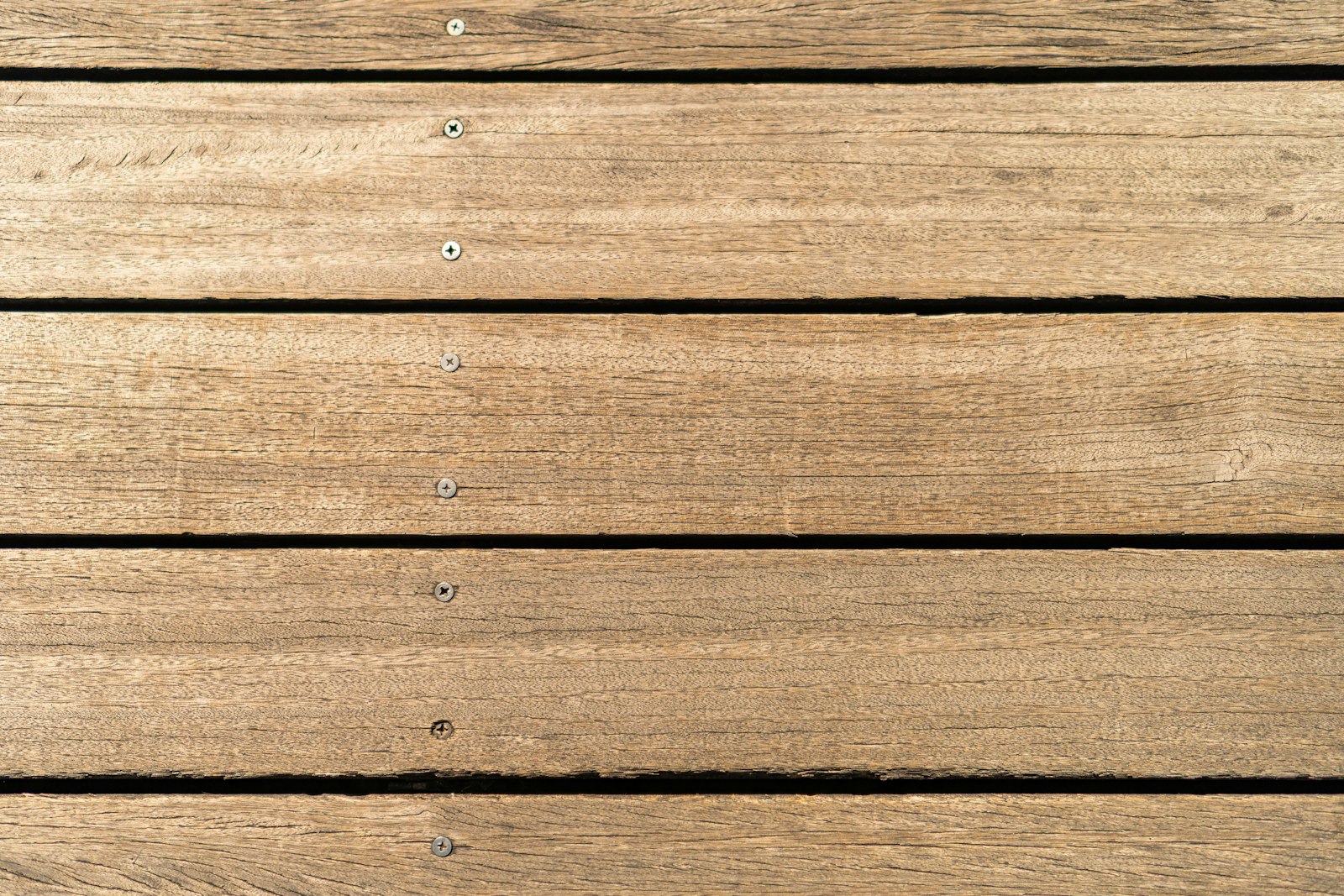
How Composite Decking Responds to Midwest Winters
Composite decking is engineered specifically to reduce the moisture-absorption problem that drives freeze-thaw damage. The category itself matters here: capped composite (a wood-plastic core wrapped in a protective polymer shell) resists moisture, stains, and fading substantially better than older uncapped composite, because the cap is what actually faces the weather. Leading capped product lines from manufacturers such as Trex, TimberTech, and AZEK are designed for exactly this kind of climate exposure.
Because a quality capped board absorbs very little water, the freeze-thaw lever has far less to work with — the practical result Chicago-area homeowners notice is dramatically less warping, splitting, and seasonal movement, and no annual sanding or re-staining ritual. Manufacturer-rated service life for premium capped composite is generally in the 25–50 year range depending on the product line, with limited fade-and-stain warranties that reflect that engineering. It is not maintenance-free in the literal sense — periodic cleaning still matters, and trapped debris between boards can still hold moisture against the substructure — but the maintenance burden is a different order of magnitude than wood in this climate. (Across the region, deck installation for Chicago-area homes has shifted noticeably toward capped composite for exactly this maintenance-to-durability ratio.)
Two installation details matter more than the brand on the box. First, the substructure is still almost always wood — even a composite-surfaced deck typically sits on a pressure-treated frame, so flashing at the ledger, joist protection tape, and proper drainage are what actually determine whether the structure survives freeze-thaw underneath the weather-proof boards. Second, composite expands and contracts with temperature more than wood does along its length; in a climate that swings from below zero to ninety-plus, correct gapping and hidden-fastener systems are not optional finish details — they are what prevents buckling and end-lift two winters later. This is the single biggest reason a premium board on an under-detailed frame still fails: the board didn't lose; the installation did.
The Total Cost of Ownership Over a 20-Year Horizon
The most common mistake homeowners make is comparing materials on installation day rather than across a deck's full life in this climate. A more useful framework — and the one worth applying to your own numbers — is total cost of ownership over roughly 20 years. The methodology is simple and you can run it with quotes specific to your project:
- Material + build, amortized: divide the up-front cost by that material's realistic Chicago-climate service life (use the ranges above: ~10–15 years for maintained wood, ~25–50 for premium capped composite).
- Recurring maintenance: for wood, add the cost and the hours of the cleaning + re-seal/re-stain cycle across the period; for composite, add periodic cleaning only.
- Replacement events: count how many times each material would realistically be rebuilt inside a 20-year window in this climate.
We are deliberately not publishing dollar figures here — pricing varies too much by deck size, height, substructure, and material line for a generic number to be honest. The point of the framework is the shape of the answer, which holds regardless of the specific quotes: wood's advantage is concentrated at the start, while composite's advantage compounds the longer the deck lives — and Chicago-area weather tends to push real-world results toward the longer-horizon view.
What Mt. Prospect and Northwest Suburban Homeowners Actually Choose
Across recent projects in Mt. Prospect, Arlington Heights, and the surrounding northwest suburbs, the pattern is consistent: homeowners who plan to stay in the home and don't want a recurring maintenance project lean strongly toward capped composite, while those prioritizing a specific natural-wood aesthetic or a lower initial outlay choose wood with eyes open about the upkeep. Neither is wrong — the right answer is the one that matches how you actually use and hold the property. What the climate removes from the table is the option of choosing wood and then ignoring maintenance; northern Illinois will not let that decision slide.
It's also worth noting that material is only half the durability story. Proper substructure, drainage, flashing, and fastener selection determine whether any deck survives freeze-thaw — a premium board on a poorly detailed frame will still fail. This is where working with a builder who understands the local climate and holds manufacturer certifications (for example, certified installation status with the major composite lines, or hardscape certifications like Techo-Pro for adjacent stonework) changes the outcome more than the board choice alone. Teams that also handle adjacent outdoor spaces — from pool deck installation to full landscape construction — bring the substructure and drainage expertise that isolated deck contractors often miss.
The Exotic Hardwood Variable
A third path deserves a brief mention: tropical hardwoods such as ipe and mahogany. These species are extremely dense — ipe's Janka hardness rating is among the highest used in decking — which gives them strong natural resistance to moisture movement and a long potential lifespan even in a freeze-thaw climate. The trade-offs are cost, the specialized fastening and pre-drilling they require, and a periodic oiling cadence if you want to retain the original color rather than let it weather to silver-gray. For most Chicago-suburb homeowners they are a niche premium choice rather than a default, but they are a legitimate option where budget and aesthetics align.
Questions to Ask Before You Decide
Rather than a recommendation, here is the short diagnostic worth running before you commit, regardless of who builds the deck:
- How long do you realistically expect to own this home? (Short horizon shifts the math toward lower up-front cost; long horizon toward durability.)
- What is your honest tolerance for a recurring maintenance project — both the cost and the weekend hours?
- How much direct sun and standing moisture will the deck's location see? (More exposure widens the gap between wood and composite outcomes.)
- Does your municipality or HOA constrain materials, railing, or height? (Confirm before, not after, design.)
- Is the substructure being detailed for freeze-thaw — drainage, flashing, fasteners — or just the visible boards?
Answer those honestly and the material choice usually answers itself. The Chicago-area climate is unforgiving, but it is also predictable — which means a deck built and specified with this climate in mind, in the right material for how you'll actually live with it, can deliver decades of use rather than a recurring rebuild. If you're still weighing the options, 3D design visualization can help you see exactly how each material and layout plays out in your specific space before any construction begins.