If you are flying out of Chicago O'Hare from the Milwaukee area over Thanksgiving or the December holidays, plan the trip backward from your departure time. Pick the least crowded travel day your schedule allows, give the roughly 80-mile drive a traffic and weather cushion on top of your normal time, reach the terminal earlier than you would in October, and settle how you are getting home before you leave. Every one of those decisions gets harder to make at the curb than at the kitchen table.
This guide walks through each step for Southeast Wisconsin travelers: which days to avoid, how to build a departure timeline, what changes on the highway in late fall, what to have ready at the terminal, and how to keep a delayed return flight from turning into a midnight scramble.
Which holiday days are the busiest at O'Hare?
The busiest days are the Sunday after Thanksgiving and the weekends that bracket Christmas and New Year's. National screening data makes the pattern plain. Ahead of Thanksgiving 2025, the Transportation Security Administration said: "This holiday season, the Transportation Security Administration (TSA) is expecting to screen more than 17.8 million people from Tuesday, Nov. 25 to Tuesday, Dec. 2, with over 3 million just on Sunday, November 30th." The agency added that "the Sunday after Thanksgiving will be one of the busiest travel days in TSA history" (TSA, November 21, 2025).
The year-end season runs longer and carries more people. TSA projected 44.3 million travelers between Friday, December 19, 2025 and Sunday, January 4, 2026, and said it expected "the heaviest traveler volume will be about 2.86 million on Sunday, Dec 28, followed by Dec 19, 20, 21, 27, and 29" (TSA, December 22, 2025).
The calendar shifts each year, but the shape holds. For 2026, Thanksgiving falls on Thursday, November 26, which puts the heavy return day on Sunday, November 29. Christmas Day and New Year's Day both land on a Friday, so expect the weekends on either side of them to carry the crowds.
If your dates are flexible, a few moves help:
- Fly earlier in the week before Thanksgiving. A Monday or Tuesday departure usually means calmer roads and checkpoints than the Wednesday rush.
- Consider flying on the holiday itself. Many travelers find Thanksgiving morning and Christmas Day quieter at the airport, because most people are already where they are going.
- Come home Monday or Tuesday instead of Sunday. Pushing the return a day or two avoids the single heaviest window of the season.
- Take the first flight of the day. Early departures are less exposed to the chain of delays that builds through a busy afternoon.
How early should you leave Milwaukee for a holiday flight out of O'Hare?
Leave early enough that a slow highway, a full parking garage and a long security line could all happen on the same morning without costing you the flight. The simplest way to get there is to work backward in four blocks.
- Start with your airline's recommended arrival time. Check the airline's own guidance for domestic and international departures, and treat it as the minimum on holiday days, not the target.
- Add a checkpoint cushion. On the peak days named above, plan as if lines will be longer than usual. If you have checked bags, remember that bag-drop cutoffs come before boarding.
- Use your real door-to-curb drive time, then add to it. Travelmath puts the Milwaukee-to-O'Hare trip at about 80 road miles (Travelmath), but your own starting point matters more than a city-center estimate. Take the time you normally allow and add a holiday cushion, then a separate weather cushion if snow or freezing rain is in the forecast.
- Add the last mile. Getting from the highway exit to the right terminal door, or from a parking garage to the terminal, takes longer when the airport roads are crowded.
Here is how that looks on paper for a traveler with a mid-morning domestic flight and one checked bag. The figures are a planning example, not a rule:
| Block | Normal week | Holiday peak day |
|---|---|---|
| Airline arrival guidance | As published | As published, plus extra checkpoint time |
| Drive from your door | Your usual time | Usual time plus a holiday cushion |
| Weather | None | A separate cushion if the forecast turns |
| Airport roads and curb | A few minutes | Noticeably longer |
The point of splitting the blocks is that each one can fail independently. A clear highway does not shorten a long security line, and a fast checkpoint does not help if you are stuck behind a crash on the Tri-State.

What changes on the drive in late November and December?
Three things change: daylight, weather and volume. In late November the sun sets before many people finish work, so evening departures and returns happen in the dark. Lake Michigan weather can turn quickly, and the first real snow of the season often catches drivers out of practice. Holiday volume adds shoppers, college students heading home and families with loaded cars to the usual commuter traffic.
Most trips from Milwaukee follow I-94 south into Illinois and then the Tri-State Tollway toward the airport. Keep these points in mind:
- Check road conditions before you go. The state's 511 Wisconsin service shows incidents, closures and winter road conditions on the Wisconsin side.
- Plan for cashless tolls. The Illinois Tollway does not take cash at the booth, so drivers need a transponder or must pay online afterward.
- Watch the Wednesday before Thanksgiving. The afternoon and evening of that day combine the end of the workweek with holiday departures in both states.
- Do not count on a clean return. If you are driving yourself, the trip home from the airport after a delayed flight may happen late at night in worse conditions than the morning drive.
What should you have ready at the terminal?
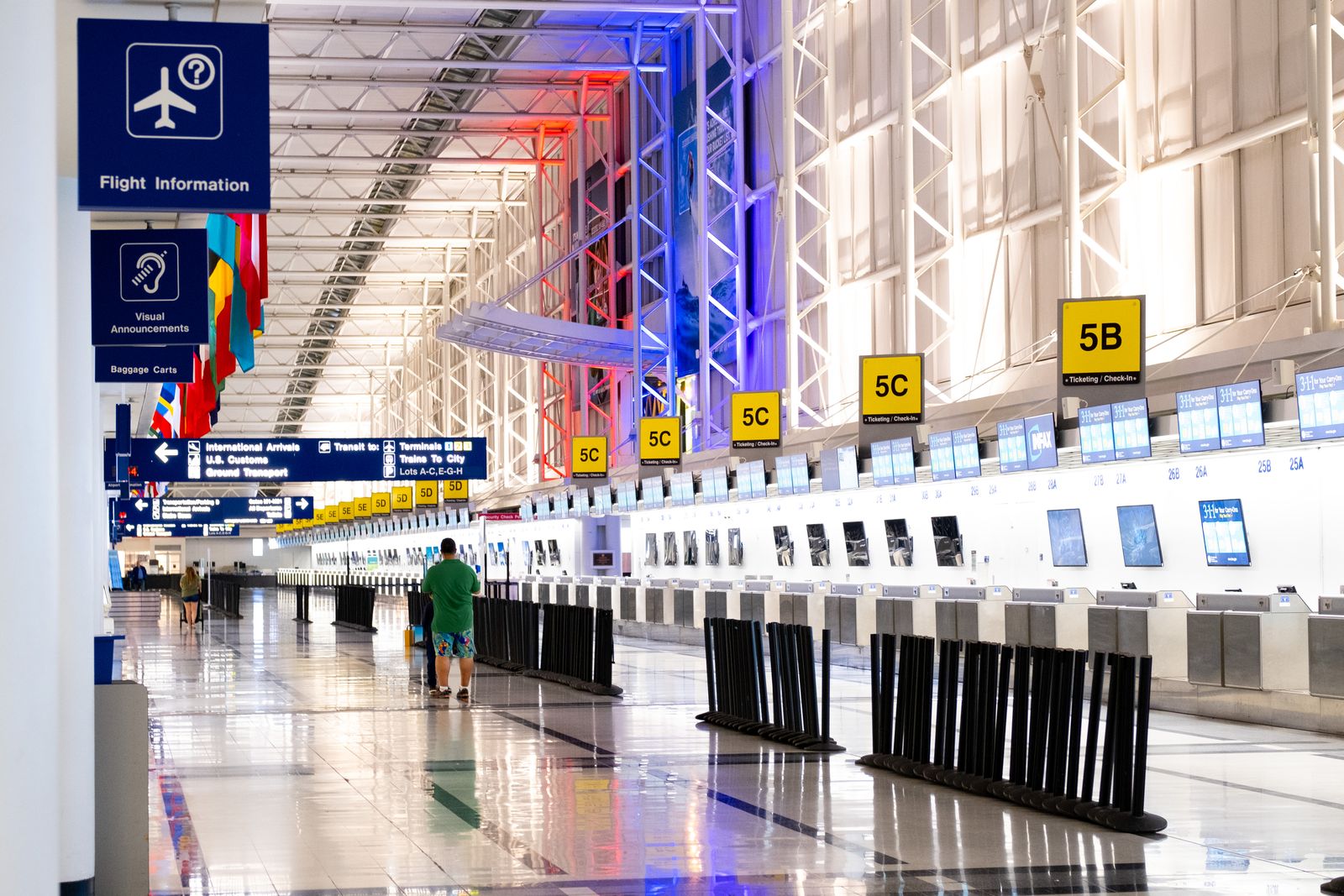
Have your terminal number, your ID and your bags sorted before you reach the airport. O'Hare spreads airlines across Terminals 1, 2, 3 and 5, and getting dropped at the wrong one costs time you will not get back on a peak day. Confirm your terminal in the airline's app the night before and again on the way, since gate and terminal assignments can change.
TSA's own holiday checklist is short. The agency asks travelers to "Bring your REAL ID, passport, or other acceptable form of identification" and to "Listen to instructions from TSA officers while at the security checkpoint." It also notes that travelers can "Text 275-872 ('AskTSA') to engage our virtual assistant 24/7," and that "Children 17 and under can join an adult with TSA PreCheck for free" (TSA, November 21, 2025).
A few more habits help during the holidays:
- Look up unusual items before you pack. Holiday food and gifts raise questions at the checkpoint. TSA's "What Can I Bring?" tool on its website answers most of them.
- Keep one bag light. If you need to move fast between the curb and the check-in counter, one easy-to-carry bag makes it easier.
- Screenshot your boarding passes. Phone signals and airport networks can slow down when terminals are packed.
How do you plan the trip home when holiday flights run late?
Plan the return before you leave, and build it around the flight number rather than the scheduled arrival time. Holiday delays tend to stack up. One late inbound aircraft can push several later flights, and weather at a connecting hub can reshuffle an evening of arrivals into Chicago.
Whoever is collecting you, whether a relative, a friend or a hired driver, should have the following before you board on the way home:
- Your airline and flight number, so they can follow the flight's status instead of guessing.
- Your terminal and whether you checked bags, which changes how long you will be inside after landing.
- A way to reach you right after you land, and an agreed meeting point.
- A backup plan if the flight is cancelled and you are rebooked for the next morning.
Asking a family member to fetch you from O'Hare is a bigger favor than it sounds. A round trip from Milwaukee is about 160 road miles, and a late arrival can mean they leave home in the evening and get back well after midnight. If your flight is delayed by hours, they either wait at the airport or turn around and do it again.

Which ground option fits a holiday trip to O'Hare?
Each option trades cost, effort and risk differently, and the holidays exaggerate those trade-offs. Here is how they compare for a Milwaukee-area traveler.
Driving yourself and parking
Driving gives you full control of timing, and you have a car waiting when you land. The downsides grow during the holidays: airport parking can fill on peak days, you pay for every day the car sits there, and you face the drive home at the end of a long travel day, possibly late at night and in winter weather.
A ride from family or friends
This option costs nothing in fares and feels personal, but it puts two highway round trips on someone else, often on the same days they are hosting or traveling themselves. It works best for midday flights on lighter days.
Train plus transit
Amtrak's Hiawatha service runs between Milwaukee and Chicago's Union Station. Reaching O'Hare from downtown then means a transfer to transit with your bags, which is manageable for a light traveler and harder for a family with luggage and children.
App-based rideshare
Rideshare is convenient inside a city, but an 80-mile airport run sits at the edge of what it does well. Fares can rise with demand during holiday peaks, and finding a driver willing to head back to Wisconsin from O'Hare late at night is not a given.
A pre-booked car service
A scheduled pickup removes the parking and the late-night drive, and a good operator plans the pickup around your flight. If you go this way, book early for the peak days, confirm the quote in writing, ask how the company follows flight changes and what happens if your plane is hours late, and check the wait-time and cancellation terms. Comparing local providers is easy. For example, a holiday car service from Milwaukee to O'Hare will usually explain how it handles early departures and late arrivals, and operators that run door-to-door rides along the Milwaukee–Chicago corridor know the timing of this drive well. Map listings help too: the reviews on a profile for West Allis airport chauffeurs show what past riders mention most, such as communication, timing and help with luggage.
A simple holiday departure checklist
- Choose your travel day with the peak dates in mind.
- Write down your airline's arrival guidance, then add checkpoint, drive, weather and curb cushions.
- Confirm your terminal the night before and on the way.
- Pack your ID, check unusual items against TSA's tool, and keep one bag light.
- Arrange the return trip before you leave and share your flight number with whoever is collecting you.
- Check road conditions and the forecast the evening before and again before you head out.
Frequently asked questions
Is it worth flying out of O'Hare instead of Milwaukee Mitchell over the holidays?
It depends on the route. O'Hare usually offers more nonstop flights and more daily departures, which matters when a delay or cancellation forces a rebooking. Mitchell is much closer for most Milwaukee-area households. Compare the full trip, including the drive, parking or ride, and the risk of a missed connection, rather than the airfare alone.
What is the worst day to drive to O'Hare around Thanksgiving?
The Wednesday before Thanksgiving tends to be hardest on the roads, because holiday departures stack on top of the normal commute. At the airport itself, the Sunday after Thanksgiving is the peak; TSA expected more than 3 million people nationwide on that day in 2025.
How much extra time should I allow if it is snowing?
There is no single number, because a light dusting and a full lake-effect band are very different drives. Check 511 Wisconsin and the forecast the night before, add a weather cushion on top of your holiday cushion, and leave the decision about an even earlier start for the morning if conditions are uncertain.
What if my return flight lands after midnight?
Settle the plan before you leave. Make sure whoever is picking you up is following the flight number, agree on a meeting point and a way to reach each other, and decide in advance what happens if the flight is pushed to the next day.